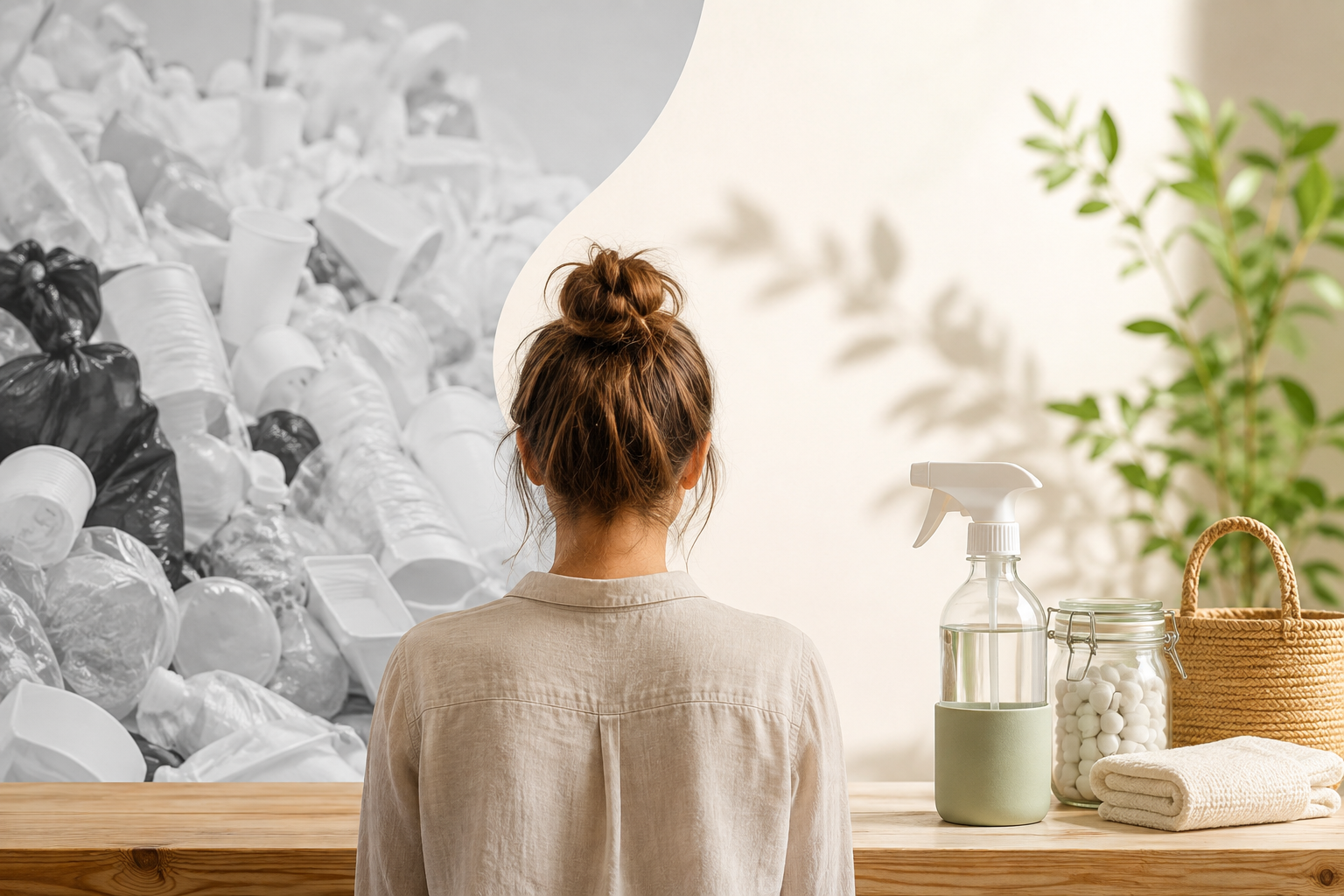
Eco-Burnout: Powerful Sustainable Habits Without the Pressure
We are constantly being reminded that the planet needs our attention and sustainable habits.
Open your phone and you might see headlines about overflowing landfills, plastic pollution, rising temperatures, disappearing forests, or the growing amount of waste we produce every day. Scroll through social media and you may find people making their own cleaning products, composting every food scrap, growing their own vegetables, avoiding plastic completely, and living lifestyles that seem almost impossibly sustainable.
The message can start to feel overwhelming.
You may genuinely want to make better choices, but suddenly sustainability feels like another responsibility on an already crowded to-do list. Should you stop buying packaged food? Start composting? Install solar panels? Give up your car? Buy only locally produced products? Avoid plastic entirely?
And when you realize that you cannot realistically do all of that, you may start feeling like doing anything at all is pointless.
That feeling has a name: eco-burnout.
Eco-burnout can happen when the constant pressure to make environmentally responsible choices becomes mentally exhausting. Instead of motivating us to act, the sheer scale of the environmental problems around us can leave us feeling guilty, frustrated, or completely powerless.
But sustainable living does not have to mean living perfectly.
In fact, one of the most sustainable things you can do is build habits that you can actually maintain.
You do not need to transform your entire life overnight. You need to identify the things you do repeatedly and find simpler, more sustainable ways to do them.
Because sometimes, the most meaningful change isn’t the most dramatic one.
It is the one you keep doing.
What Is Eco-Burnout?
Eco-burnout is the mental and emotional exhaustion that can come from feeling overwhelmed by environmental problems or by the responsibility to live sustainably.
It can look different for everyone.
For one person, it might be guilt every time they use a plastic bag. For another, it might be frustration about not being able to afford every eco-friendly product they see online. Someone else might become exhausted by constantly researching whether a product is recyclable, compostable, reusable, biodegradable, or genuinely environmentally friendly.
Eventually, sustainability starts feeling less like a positive lifestyle choice and more like a test you are constantly failing.
That is where the problem begins.
When environmental responsibility becomes associated with guilt and perfection, people can move from “I want to help” to “I can’t do enough, so why bother?”
And that mindset can make sustainable behavior harder, not easier.
The solution isn’t to stop caring.
It is to make sustainability more realistic.
Visit us on : INSTAGRAM
Why Sustainable Living Can Feel Like a Full-Time Job
Modern sustainability advice can sometimes make everyday life sound incredibly complicated.
You might hear that you should:
- Compost your food scraps.
- Grow your own vegetables.
- Avoid fast fashion.
- Buy everything locally.
- Use public transport or cycle everywhere.
- Install solar panels.
- Stop using disposable products.
- Avoid plastic packaging.
- Buy second-hand.
- Make your own cleaning products.
- Reduce household energy consumption.
- Carry reusable everything.
Many of these are genuinely useful ideas.
The problem is that trying to implement all of them simultaneously can create an unrealistic standard.
Most people have jobs, families, studies, financial responsibilities, social commitments, and limited time. Sustainability has to fit into that reality.
If a sustainable habit requires significant additional time, money, effort, or planning every single day, there is a greater chance that it will eventually become exhausting.
That doesn’t mean high-effort sustainable choices are bad.
It simply means they are not necessarily the best place to start.
Instead, look at the things you already do frequently.
Then ask:
Can I make this existing habit more sustainable without making my life significantly harder?
That question can change everything.
Also read ECO-FRIENDLY
The Perfection Trap
One of the biggest causes of eco-burnout is the belief that sustainability only counts if we do it perfectly.
We think:
“If I still use plastic sometimes, I’m not sustainable.”
“If I can’t afford the most environmentally friendly option, I’m failing.”
“If I can’t eliminate waste completely, what’s the point?”
This is an all-or-nothing way of thinking.
And it can turn a positive change into a source of unnecessary guilt.
Imagine someone deciding that they want to reduce household waste. Instead of starting with one or two manageable changes, they attempt to completely redesign their lifestyle overnight.
They start composting, making homemade cleaners, buying only package-free groceries, avoiding every disposable product, shopping exclusively second-hand, and tracking every piece of waste.
For a few weeks, everything goes perfectly.
Then life gets busy.
They order takeaway. They buy something in plastic packaging. They forget their reusable bag. They don’t have time to compost.
Suddenly, the entire effort feels like a failure.
So they give up.
The problem wasn’t that the person didn’t care enough.
The problem was that the system they created was too difficult to maintain.
Sustainability should be a long-term habit, not a short-term challenge.
High-Effort vs. High-Frequency Sustainable Habits
A useful way to think about sustainable living is to separate high-effort habits from high-frequency habits.
High-effort habits can be valuable, but they often require continuous motivation.
For example:
- Hand-washing all your laundry to reduce electricity use.
- Cycling a very long distance to work every day.
- Growing a large percentage of your own food.
- Making every household product yourself.
- Completely eliminating packaged food from your diet.
These choices may work brilliantly for some people.
But they aren’t realistic for everyone.
High-frequency habits work differently.
They focus on things you already do repeatedly and make the process more sustainable with little additional effort.
For example:
- Carrying a reusable water bottle.
- Switching to paperless billing.
- Using refillable household products.
- Choosing reusable shopping bags.
- Reusing containers instead of immediately throwing them away.
- Replacing frequently purchased single-use products with longer-lasting alternatives.
The important difference is that once the initial decision has been made, the sustainable option becomes part of your normal routine.
You don’t have to make the decision again every morning.
And that’s powerful.
Why High-Frequency Habits Can Matter So Much
Think about how many times you clean your kitchen counters, wash your dishes, refill your water bottle, or use a household cleaning product over the course of a year.
Now imagine changing one of those routines.
You don’t have to make a dramatic lifestyle change.
You simply change the product or system you use within an existing habit.
This is where small sustainable switches can become meaningful.
A habit repeated once may seem insignificant.
A habit repeated hundreds of times becomes part of your lifestyle.
That is the idea behind compound impact.
The goal isn’t necessarily to make every individual action enormous.
The goal is to make better choices in places where you have the opportunity to repeat them again and again.
How to Choose Sustainable Habits That Actually Stick
If you are already feeling overwhelmed by sustainability, don’t start by creating a list of 50 things you need to change.
Start with one.
A simple framework can help.
1. Start With Something You Already Do
Look at your daily routine.
What products do you use repeatedly?
What do you throw away regularly?
What do you purchase again and again?
These are often the best opportunities for sustainable changes.
2. Choose One Easy Switch
Don’t choose the most difficult environmental problem in your life.
Choose something manageable.
If you regularly buy disposable household products, for example, consider whether there is a refillable alternative.
If you regularly buy bottled water, consider whether a reusable bottle works for your routine.
The goal is to reduce friction, not create more of it.
3. Make the Sustainable Choice Convenient
Convenience matters.
A sustainable product that requires complicated preparation every time may not become a long-term habit.
The best sustainable systems often make the better choice the easier choice.
Keep reusable products where you actually need them. Keep refills available before you run out. Make sustainable alternatives visible and convenient.
Design your environment so your habits don’t depend entirely on motivation.
4. Give Yourself Permission to Be Imperfect
You will still make unsustainable choices sometimes.
That’s okay.
You don’t need to turn sustainability into a moral scorecard.
One takeaway meal doesn’t erase months of better choices.
One plastic bottle doesn’t cancel every reusable bottle you’ve used.
One missed recycling opportunity doesn’t mean you should stop caring.
The objective is progress that lasts.
5. Add Another Habit When You’re Ready
Once one change becomes automatic, you can consider another.
There is no deadline.
Sustainable living is not a competition.
You don’t get extra points for burning yourself out faster.
10 Small Sustainable Habits You Can Start Today
If you’re looking for realistic ways to make your everyday routine a little more sustainable, start here.
1. Refill Instead of Replace
One of the simplest changes is to stop buying an entirely new container every time you need more of a product.
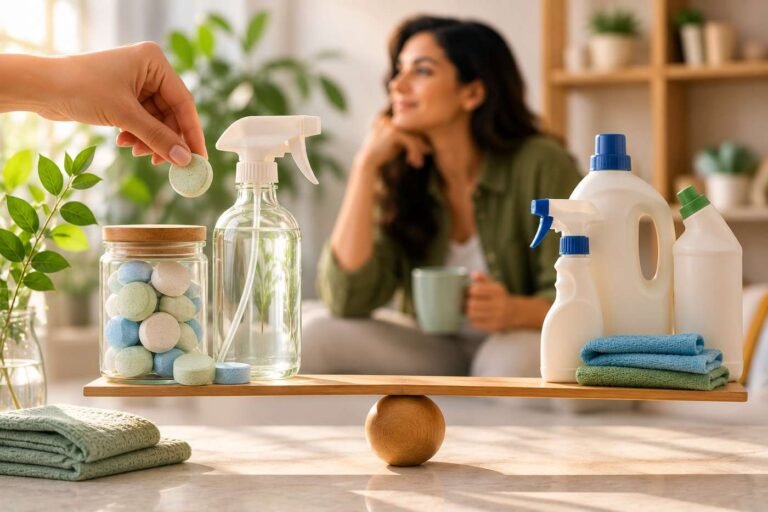
Refill systems allow you to keep using the container you already own while replacing only what you actually need.
This can be particularly useful for frequently used household products.
2. Carry a Reusable Water Bottle
A reusable bottle is one of those simple changes that becomes almost invisible once it becomes part of your routine.
Keep it in your bag, at your desk, or in your car so you don’t have to remember it every time.
3. Switch to Paperless Bills and Statements
Paperless billing is a small administrative change, but it requires almost no ongoing effort once activated.
It’s a good example of a sustainable habit that can run quietly in the background.
4. Keep Reusable Bags Somewhere Convenient
Reusable bags are easy to forget when they’re hidden in a cupboard.
Keep a few where you’ll actually remember them—near your door, in your car, or inside your everyday bag.
5. Reuse Before Replacing
Before throwing something away, ask whether it can be used again.
Containers, jars, boxes, bags, and other household items often have a second life.
6. Buy Concentrated or Refill Products Where Appropriate
Products that separate the product from unnecessary packaging or water can sometimes offer a more efficient approach to household consumption.
The key is to look beyond the front label and understand how the product is actually designed and used.
7. Choose Durable Products for Frequent Tasks
If you use something every day, durability matters.
A product that can stay in your routine for years can be a more sensible choice than repeatedly buying and discarding short-lived alternatives.
8. Reduce Unnecessary Packaging
You don’t need to eliminate packaging completely.
Instead, start noticing where unnecessary packaging appears in your routine and choose alternatives when they are practical.
9. Repair or Reuse Before Buying New
Not everything needs to be replaced immediately.
A small repair, replacement part, or creative reuse can sometimes extend the life of something you already own.
10. Focus on Progress, Not Purity
Perhaps the most important habit is changing the way you think about sustainability.
You don’t have to become a zero-waste expert.
You simply need to keep making sensible improvements where you can.
The Compound Impact of a Simple Cleaning Switch
Household cleaning is a particularly interesting example because it is something most of us do repeatedly.
Think about a traditional cleaning routine.
You finish a bottle of cleaner, throw away the container, purchase another bottle, and bring it home.
Then you repeat the process.
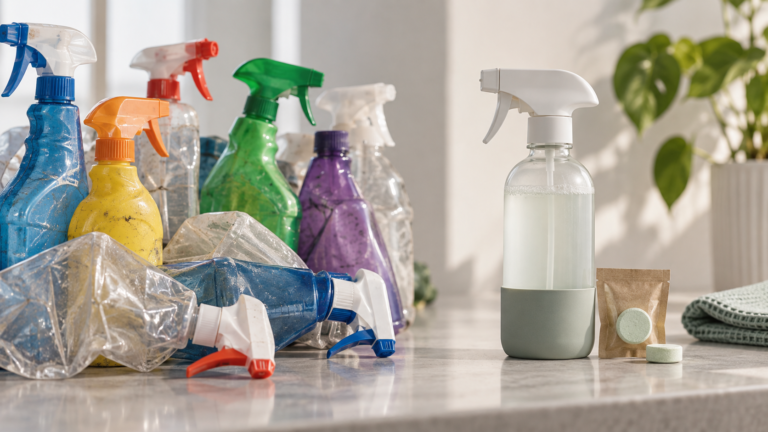
The product is mostly water, yet you’re repeatedly purchasing, packaging, transporting, and storing that water alongside the cleaning ingredients.
A refill-based approach changes the system.
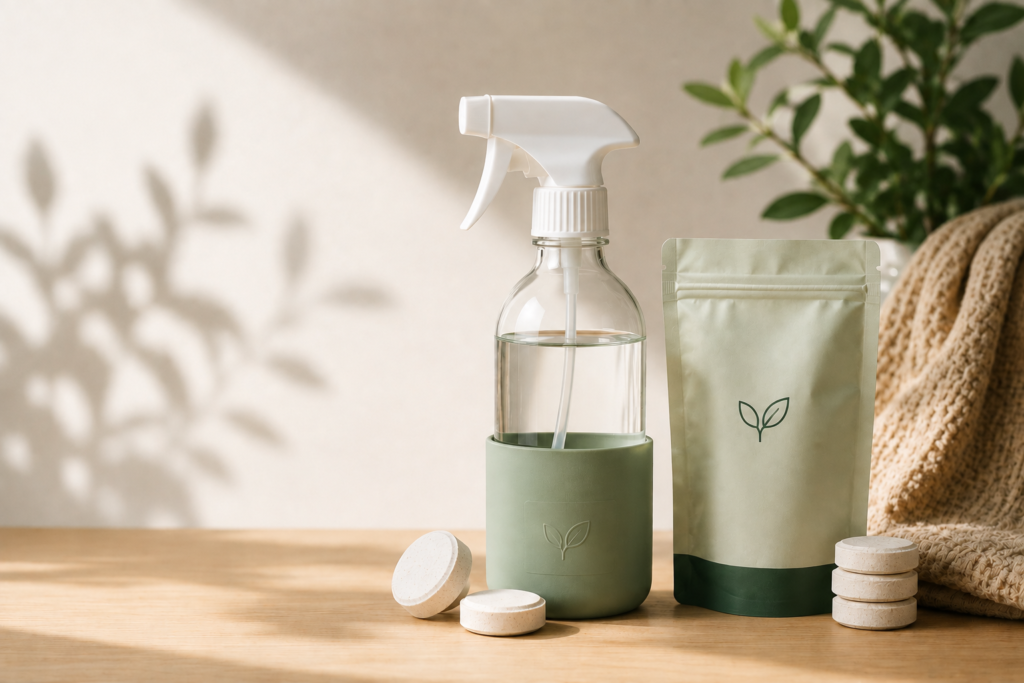
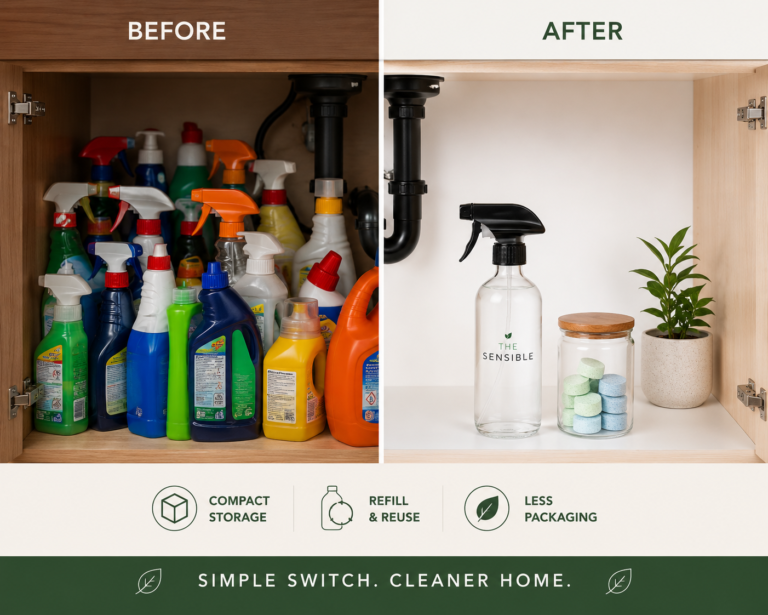
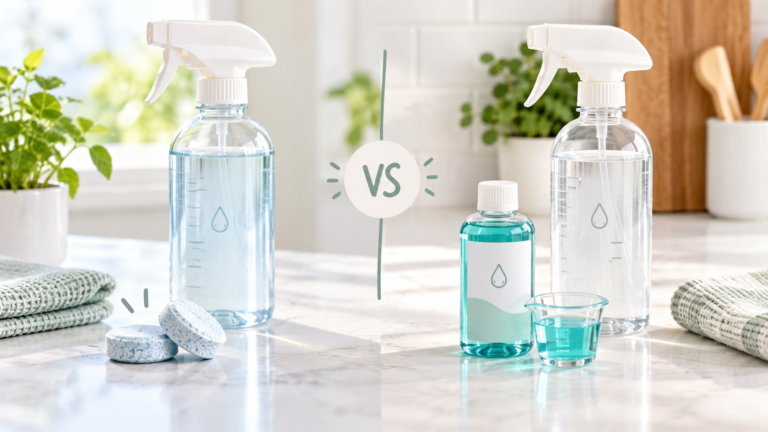
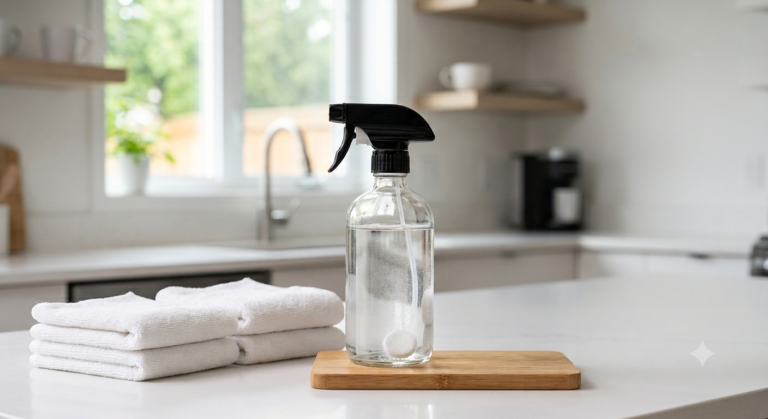
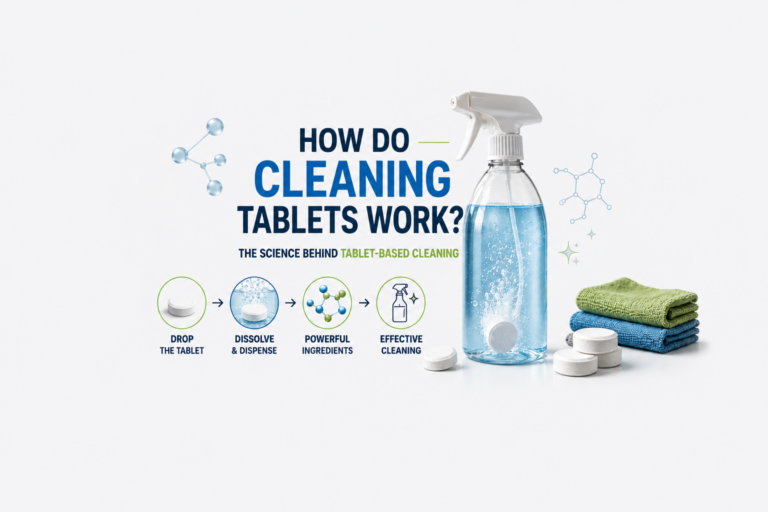
With The Sensible, for example, you can keep a permanent bottle and use concentrated cleaning tablets to create your cleaning solution at home.
The routine remains familiar.
You still fill a bottle.
You still clean your counters.
You still wipe down surfaces.
The difference is in the system behind the habit.
Instead of repeatedly purchasing another complete spray bottle, you keep the bottle and replenish the product using a compact refill.
That is the kind of switch that can work well for people experiencing eco-burnout because it doesn’t ask them to completely redesign their lives.
It asks them to change one repeated purchase.
And then keep using that change.
The Power of Removing Water From the Equation
There is another interesting aspect of concentrated cleaning products: you’re not necessarily paying to repeatedly transport the same amount of water.
Traditional liquid cleaning products are already diluted and packaged before they reach your home.
With concentrated formats, the idea is different.
The product is designed to be transported in a smaller, lighter form and mixed with water when you are ready to use it.
For consumers, that can mean less bulky storage and fewer complete bottles moving through the supply chain.
For brands, it also creates an opportunity to rethink how everyday household products are packaged and delivered.
But the most important point is simple:
A sustainable product works best when it fits naturally into the behavior people already have.
You shouldn’t need to become a sustainability expert to use a better system.
Small Changes Don’t Have to Feel Small
One reason people underestimate small habits is that we tend to look at individual actions rather than repeated behavior.
Replacing one disposable bottle doesn’t feel revolutionary.
Refilling a bottle doesn’t feel revolutionary.
Carrying a reusable bag doesn’t feel revolutionary.
Choosing a refill instead of a new container doesn’t feel revolutionary.
And that’s exactly the point.
Sustainability doesn’t have to feel dramatic every time you do it.
A small decision repeated consistently can become much more meaningful than a dramatic decision that lasts for three weeks.
Think about brushing your teeth.
You don’t wake up every morning thinking, “Today I am going to make a major contribution to my dental health.”
You simply do it.
The habit has become automatic.
The same principle can apply to sustainability.
The best sustainable habits are often the ones you eventually stop thinking about.
You Don’t Have to Save the Planet Before Breakfast
There is a lot of understandable urgency around environmental issues.
We should care.
We should make better choices.
We should look for ways to reduce unnecessary waste and consumption.
But caring about the environment doesn’t mean carrying the entire weight of the problem on your shoulders.
You are one person.
You cannot control every supply chain, manufacturing process, packaging decision, government policy, or corporate environmental practice.
What you can control is your own routine.
And that is where sustainable living becomes more manageable.
Instead of asking:
“How can I become perfectly sustainable?”
Try asking:
“What’s one thing I already do regularly that I could do a little better?”
That question is much easier to answer.
Maybe it’s your cleaning routine.
Maybe it’s the way you buy water.
Maybe it’s your shopping bags.
Maybe it’s your clothing purchases.
Maybe it’s simply reusing something instead of replacing it.
Start there.
Sustainability Should Work With Your Life, Not Against It
The ultimate goal isn’t to create a lifestyle where every decision requires environmental research.
It’s to create a lifestyle where better choices become normal.
That might mean keeping a reusable bottle on your desk.
It might mean using refillable household products.
It might mean choosing products designed to last longer.
It might mean buying less, reusing more, or simply becoming more conscious of what you consume.
And sometimes, you will still choose convenience.
That’s part of being human.
Sustainable living doesn’t require perfection.
It requires consistency.
The most useful question isn’t whether you are doing enough.
It’s whether there is one small change you can make today that will still be part of your routine six months from now.
If the answer is yes, you’ve already made a start.
Small Ripples Make Big Waves
Eco-burnout often comes from looking at the size of the environmental problem and comparing it with the size of our individual actions.
The problem looks enormous.
Our action looks tiny.
So we assume the action doesn’t matter.
But sustainable living isn’t about one person solving everything.
It’s about millions of people making better choices where they realistically can.
One refill.
One reusable bottle.
One less unnecessary purchase.
One product used again instead of replaced.
One small habit repeated tomorrow.
Then the next day.
And the day after that.
The goal isn’t to live a perfect zero-waste life.
The goal is to make sustainability simple enough that you can keep doing it.
Because the most sustainable habit isn’t necessarily the most impressive one.
It’s the one that fits into your life, becomes part of your routine, and keeps working long after the initial motivation disappears.
So if sustainability has started to feel exhausting, take a step back.
You don’t need to save the world before breakfast.
Choose one sensible switch.
Make it easy.
Make it repeatable.
And let the small ripples add up.
One Comment