How to Use Cleaning Tablets: A Simple Step-by-Step Guide
If you have never used a cleaning tablet before, the process can seem a little unfamiliar.
Instead of picking up a ready-to-use spray bottle, you start with a small tablet.
Then what?
How much water should you add?
Should the tablet go into the bottle first or the water?
How long should you wait?
Can you use hot water?
Can you use the finished solution on every surface?
The good news is that how to use cleaning tablets is actually quite simple once you understand the basic process.
In most cases, you are preparing a cleaning solution by combining a concentrated tablet with the recommended amount of water in a suitable bottle or container.
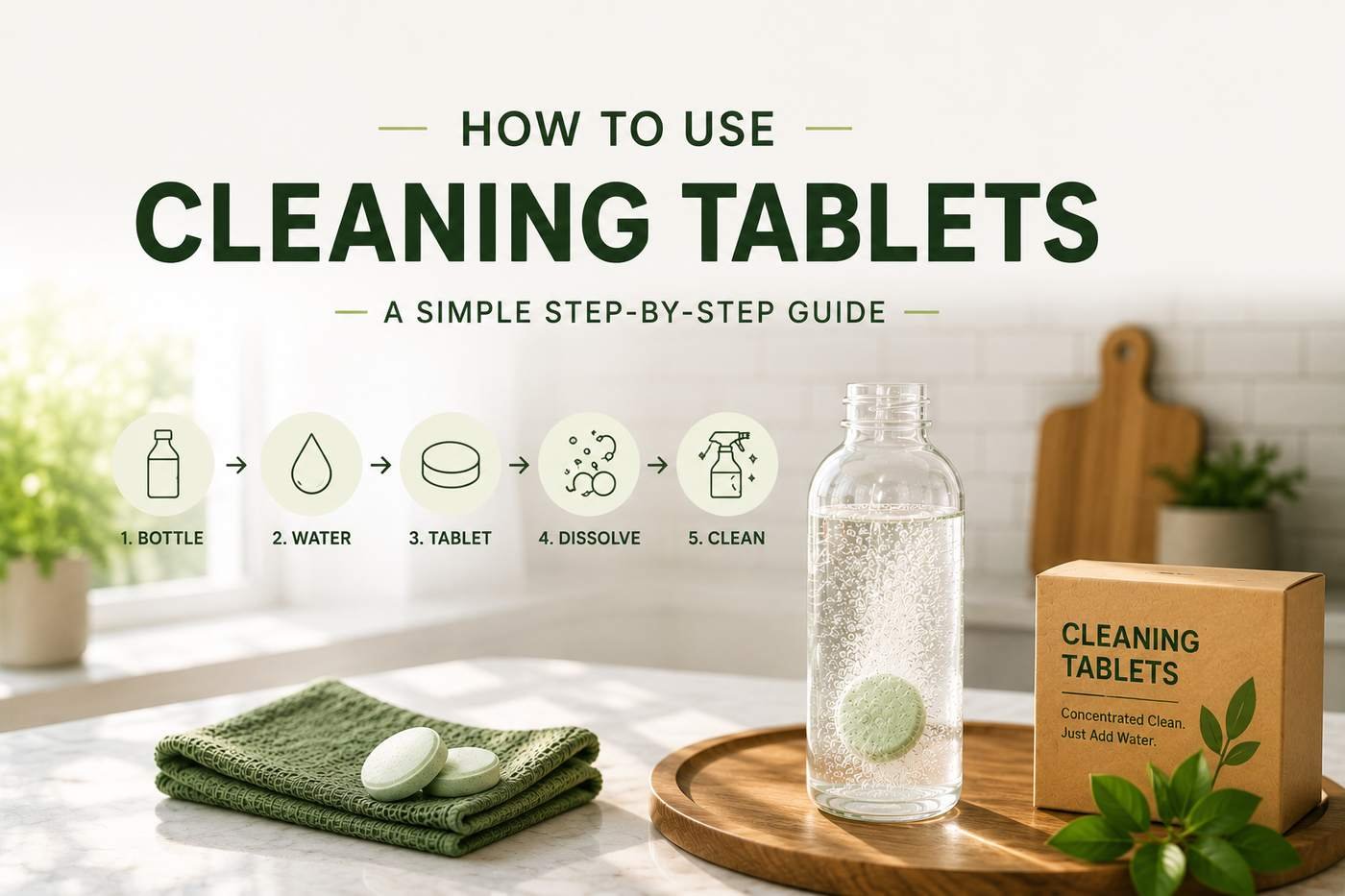
The basic process looks like this:
Bottle → Water → Tablet → Dissolve → Use
However, there are a few details that matter.
The exact instructions can vary between products, so you should always follow the manufacturer’s directions for the specific tablet you are using.
If you’re completely new to the concept, you may also want to start with our beginner’s guide to What Are Cleaning Tablets? A Beginner’s Guide, which explains what cleaning tablets are and how they differ from traditional ready-to-use cleaners.
In this guide, we’ll walk through the process step by step.
What Do You Need to Use Cleaning Tablets?
Before you begin, you generally need only a few things.
1. A suitable bottle
You’ll need a clean bottle or container appropriate for the cleaning solution.
Many tablet-based cleaning systems are designed around reusable bottles, but the exact bottle size and design can vary.
Check the manufacturer’s instructions before preparing the solution.
2. A cleaning tablet
Use the tablet intended for the cleaning task you want to perform.
For example, a product may be designed specifically for:
- Glass and mirrors
- Kitchen surfaces
- Bathroom cleaning
- Floors
- Multi-surface cleaning
- Other household cleaning applications
Don’t assume that one tablet is suitable for every surface simply because it dissolves in water.
The formulation matters.
3. The recommended amount of water
This is one of the most important parts of the process.
The manufacturer should specify how much water is required for the tablet.
Use that amount rather than estimating.
The concentration of the finished solution depends on the tablet-to-water ratio, so changing the amount of water can change the resulting solution.
4. A suitable cleaning cloth or tool
Once the solution is ready, you’ll need an appropriate cleaning tool.
Depending on the task, this might be:
- A microfiber cloth
- A cleaning cloth
- A sponge
- A mop
- Another suitable cleaning tool
The cleaning solution and the physical cleaning action work together.
How to Use Cleaning Tablets: Step-by-Step
Step 1: Choose the Correct Bottle
Start with a clean bottle that is suitable for the cleaning product.
If the tablet is designed for a specific bottle size, use that size.
For example, if the instructions specify a particular volume, don’t simply use a much larger or smaller bottle and assume the tablet will work in exactly the same way.
The bottle also needs to be suitable for the finished cleaning solution.
A reusable spray bottle may be appropriate for some products, while other formulations may require a different type of container.
Why does the bottle matter?
The bottle isn’t just packaging.
It becomes part of how you use the finished cleaning solution.
A spray bottle, for example, allows you to distribute a small amount of solution across a surface before wiping.
A foaming bottle is designed to dispense a different type of product.
So use the bottle recommended for the specific cleaning tablet whenever the manufacturer provides one.
Step 2: Add the Recommended Amount of Water
Once you have the right bottle, add the amount of water specified by the manufacturer.
This is where many first-time users make a simple mistake.
They fill the bottle approximately and assume that “close enough” is good enough.
It is better to measure or use the bottle’s recommended fill level.
Why is the amount of water important?
As we discussed in How Do Cleaning Tablets Work?, the tablet contains a concentrated cleaning formulation that is prepared with water.
The final concentration depends partly on the amount of water used.
Using considerably more water can make the solution more diluted.
Using considerably less water can make it more concentrated.
Neither is necessarily better.
The product has been designed around a particular dilution, so follow the instructions.
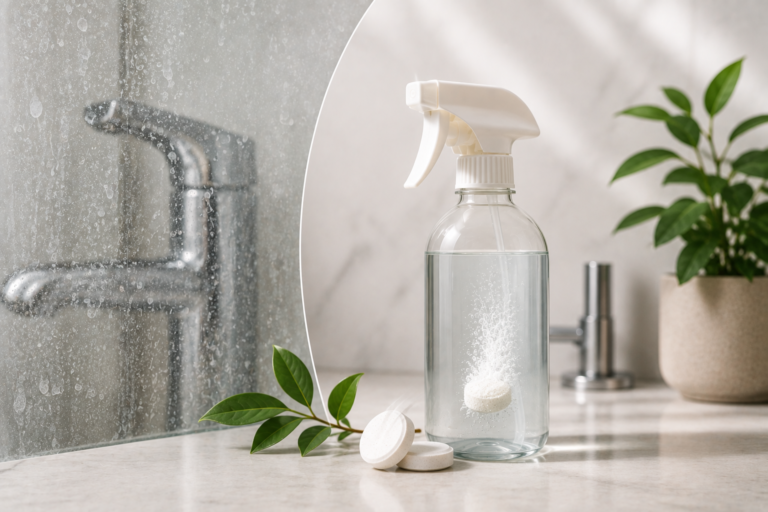
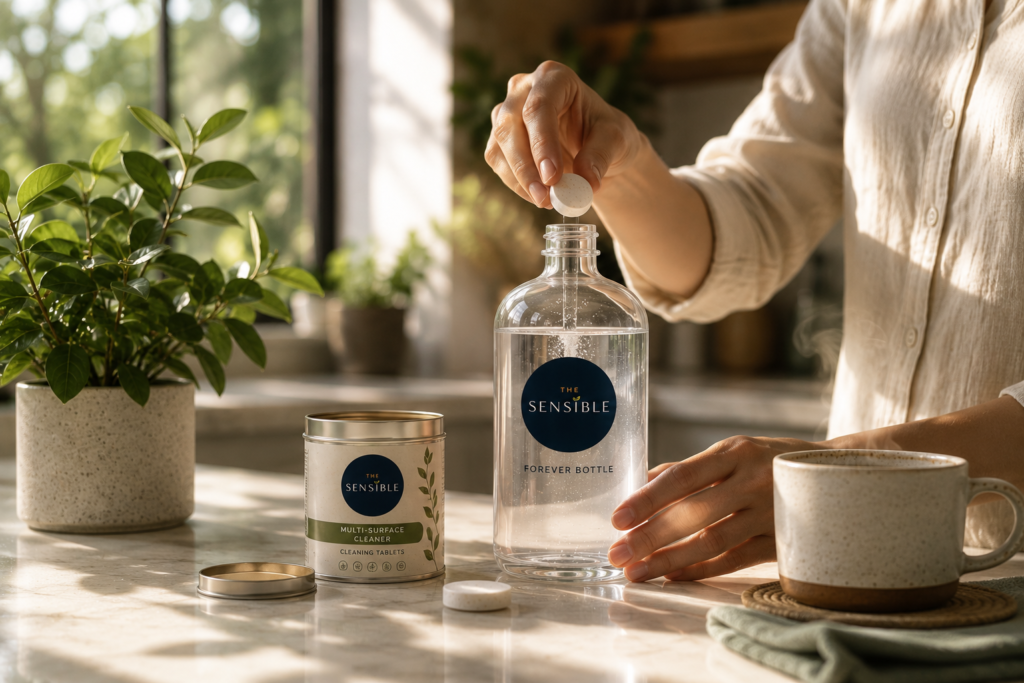
Step 3: Add the Cleaning Tablet
Once the water is in the bottle, add the recommended tablet.
Depending on the product, the tablet may begin dissolving immediately.
You may see:
- Bubbles
- Fizzing
- Movement in the water
- The tablet gradually breaking apart
- The tablet slowly disappearing
Don’t worry if your tablet behaves differently from another product you’ve seen online.
Different formulations can dissolve differently.
Some tablets may fizz noticeably.
Others may dissolve more quietly.
Visible fizzing is not a reliable measure of cleaning performance.
What matters is whether the tablet dissolves as instructed and produces the intended cleaning solution.
Step 4: Let the Tablet Dissolve
This is the part where patience matters.
Allow the tablet to dissolve according to the manufacturer’s instructions.
Don’t assume that the solution is ready simply because the tablet has mostly disappeared.
Depending on the formulation, some ingredients may take longer to dissolve or disperse.
Should you shake the bottle?
Don’t automatically shake it.
Some products may have specific instructions about agitation, while others may not require it.
If the manufacturer tells you to shake, swirl or mix the solution after dissolution, follow those instructions.
Otherwise, let the tablet dissolve naturally.
And importantly, never seal or pressurize a container if the product instructions specifically warn against doing so while the tablet is dissolving.
Follow the instructions supplied with the product.
Can You Use Hot Water?
This is one of the most common questions people have when learning how to use cleaning tablets.
The short answer is:
Only if the manufacturer recommends it.
It may seem logical that hotter water should make a tablet dissolve faster.
And temperature can affect the rate at which some materials dissolve.
But that doesn’t mean hot water is automatically appropriate for every cleaning formulation.
Different tablets can have different ingredients and preparation requirements.
Unless the product specifically recommends warm or hot water, use the water temperature specified in the instructions.
For everyday preparation, don’t try to improve the product by experimenting with water temperature.
Step 5: Check That the Solution Is Ready
Once the tablet has dissolved according to the instructions, check that the solution is ready for use.
The finished liquid may look different depending on the product.
It could be:
- Clear
- Slightly cloudy
- Coloured
- Fragranced
- Foamy or mildly bubbly
Appearance alone isn’t necessarily a reliable indicator of whether the product is working.
The important thing is that the tablet has been prepared according to the manufacturer’s instructions.
If the instructions say to wait a particular amount of time, follow them.
Step 6: Use the Cleaning Solution as Directed
Now you can use the prepared cleaning solution for its intended purpose.
For a spray cleaner, apply an appropriate amount to the surface.
Then wipe using a suitable cloth or cleaning tool.
For a floor-cleaning solution, follow the instructions for dilution and application.
For a glass cleaner, use the product according to its surface-specific directions.
The exact cleaning method depends on the formulation.
This is why the cleaning tablet and the cleaning task need to match.
A tablet designed for one application shouldn’t automatically be treated as a universal cleaner.
Step 7: Give the Cleaner Time to Work When Required
Some cleaning tasks are straightforward:
Spray → wipe → done.
Others may require the cleaning solution to remain on the surface for a specified period.
This is sometimes called contact time.
If the product instructions specify a contact time, follow it.
Don’t assume that wiping immediately is always better.
Similarly, don’t leave a cleaning solution sitting on a surface indefinitely.
The correct approach depends on the formulation and the surface.
Step 8: Wipe the Surface Properly
The cleaning solution isn’t doing all the work by itself.
Your cleaning tool plays an important role too.
A suitable cloth physically removes the loosened dirt, dust, grease or residue from the surface.
For everyday surface cleaning, a clean microfiber cloth can be useful because it can pick up dirt while distributing the solution across the surface.
However, the correct cleaning tool can vary depending on the surface and cleaning task.
A simple routine
Apply → Allow the product to work if instructed → Wipe → Inspect
If the surface still has visible residue, you may need to repeat the cleaning process or use a product specifically designed for that type of soil.
Step 9: Store the Remaining Tablets Properly
If you have tablets left over, storage matters.
Cleaning tablets are generally intended to remain dry until you are ready to use them.
Moisture can affect some tablet formulations.
Keep unused tablets according to the manufacturer’s storage instructions.
Avoid leaving an opened package in a damp area where water or humidity can reach the tablets.
This is particularly relevant in places such as bathrooms, where humidity can be relatively high.
We’ll explore this in more detail in our upcoming guide:
How to Store Cleaning Tablets Properly
Follow The Sensible on : facebook
What If the Tablet Isn’t Dissolving?
Don’t panic.
There are several possible reasons why a tablet may appear to dissolve slowly.
The exact cause can depend on:
- The formulation
- Water temperature
- Water quantity
- Tablet structure
- Storage conditions
- Exposure to moisture
- The product’s intended dissolution time
First, check the instructions.
Make sure you have used the correct amount of water and followed the recommended preparation method.
Don’t immediately add another tablet.
And don’t automatically crush the tablet.
If the product consistently behaves differently from the manufacturer’s instructions, check the storage conditions and contact the manufacturer if necessary.
Common Mistakes When Using Cleaning Tablets
Cleaning tablets are simple to use, but a few common mistakes are worth avoiding.
1. Using the Wrong Amount of Water
This is probably the easiest mistake to make.
Don’t estimate if the manufacturer provides a specific volume.
The water-to-tablet ratio affects the concentration of the finished solution.
2. Adding Extra Tablets
More product doesn’t automatically mean better cleaning.
If one tablet is designed for a particular volume of water, adding two tablets changes the formulation concentration.
Follow the recommended quantity.
3. Using the Wrong Cleaning Tablet
A bathroom tablet and a glass-cleaning tablet may be formulated differently.
Use the product for the cleaning task it was designed for.
4. Using the Solution on the Wrong Surface
Not every cleaning solution is suitable for every material.
Before using a product on a new or delicate surface, check the manufacturer’s instructions.
If appropriate, test the product on a small, inconspicuous area first.
5. Ignoring Contact Time
If the instructions specify that the product should remain on the surface for a certain period, don’t immediately wipe it away.
Follow the recommended instructions.
6. Leaving the Solution on a Surface for Too Long
The opposite mistake can also be problematic.
Don’t assume that longer contact always means better cleaning.
Follow the product instructions and avoid allowing cleaning products to dry on surfaces unless specifically directed.
7. Using Hot Water Without Checking
Hot water may seem like an easy way to speed up dissolution.
But don’t assume it is appropriate.
Use the recommended water temperature.
8. Mixing Cleaning Products
This is an important one.
Never mix cleaning products unless the manufacturer specifically says that the combination is safe.
Different cleaning ingredients can interact in ways you may not expect.
Use one cleaning product at a time and follow its instructions.
9. Storing Tablets in a Damp Place
A cleaning tablet needs to remain stable until you are ready to use it.
Keep unused tablets protected from moisture according to the manufacturer’s storage instructions.
How Much Cleaning Solution Does One Tablet Make?
There isn’t one universal answer.
The amount of finished solution depends on the specific tablet and its formulation.
One product might be designed for a particular bottle volume, while another may use a different dilution.
That’s why you shouldn’t compare tablets simply by counting how many tablets are in a package.
Instead, look at:
Tablet quantity + recommended dilution + intended use
For example, if one tablet produces a particular volume of finished cleaning solution, that gives you a more meaningful basis for comparison than simply saying one box contains more tablets than another.
This will become especially useful when we discuss Are Cleaning Tablets Worth It? A Practical Buyer’s Guide.
Can You Prepare Cleaning Tablets in Advance?
This depends on the product.
Some cleaning solutions may have a defined period of stability after preparation, while others may be intended to be prepared and used within a particular timeframe.
Don’t assume that a dissolved tablet has the same shelf life as the original dry tablet.
The manufacturer’s instructions should tell you how the prepared solution should be stored and how long it is intended to remain usable.
If no specific guidance is provided, don’t assume that a prepared solution can simply be stored indefinitely.
Can You Reuse the Bottle?
One of the interesting aspects of tablet-based cleaning is the possibility of using a reusable bottle.
Instead of replacing the bottle each time you need another batch of cleaning solution, a compatible system allows you to keep the bottle and prepare another solution using a new tablet.
However, the bottle still needs to be cleaned properly between uses when required.
Don’t simply keep adding new cleaning solution indefinitely.
Rinse or clean the bottle according to the manufacturer’s instructions, particularly when changing between different cleaning formulations.
What If I Want to Change From One Cleaner to Another?
Suppose you have a reusable bottle that previously contained one type of cleaning solution and you want to use it for another.
Don’t simply add a new tablet without considering what remains in the bottle.
Clean and rinse the bottle appropriately before switching products.
This reduces the possibility of different formulations being mixed accidentally.
Again:
Don’t mix cleaning products.
A clean bottle gives you a much better starting point for the next cleaning solution.
Are Cleaning Tablets Difficult to Use?
Not really.
The first time can feel unfamiliar because you’re accustomed to buying a finished liquid.
But once you understand the routine, it becomes straightforward:
1. Choose the right bottle.
2. Add the recommended amount of water.
3. Add the correct tablet.
4. Allow it to dissolve.
5. Use the solution according to the instructions.
That’s essentially it.
The key is not complexity.
It’s consistency.
Use the right tablet, the right amount of water and the right cleaning method.
Cleaning Tablets vs Ready-to-Use Cleaners
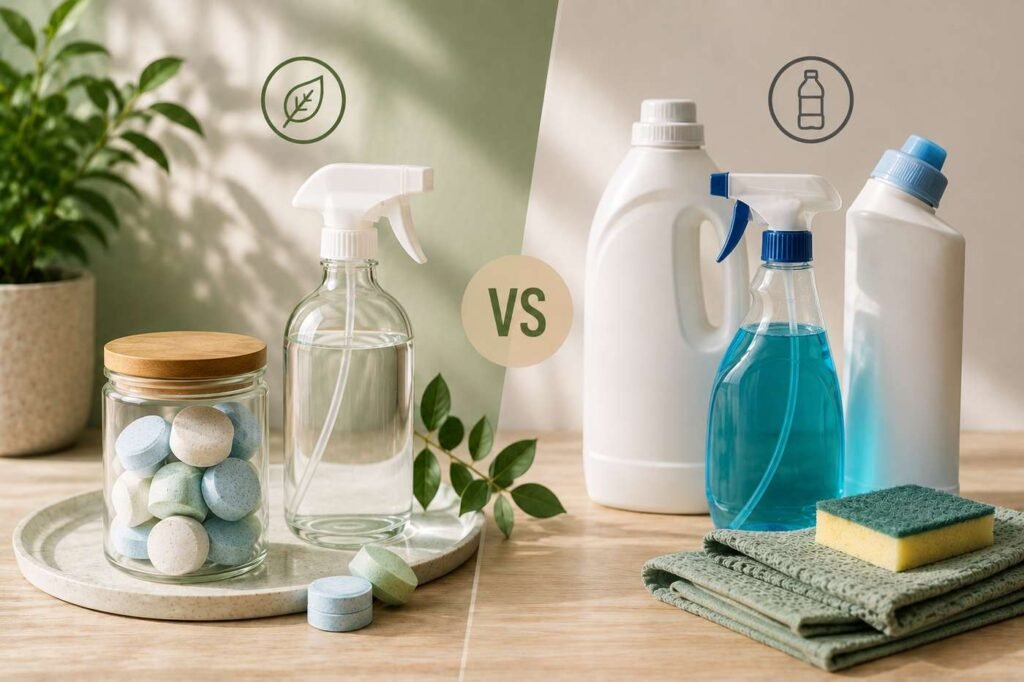
If you’re deciding whether tablet-based cleaning fits into your routine, the biggest difference is preparation.
With a traditional ready-to-use cleaner:
Buy → Open → Spray → Clean
With a cleaning tablet:
Prepare → Dissolve → Spray → Clean
The tablet format adds one preparation step.
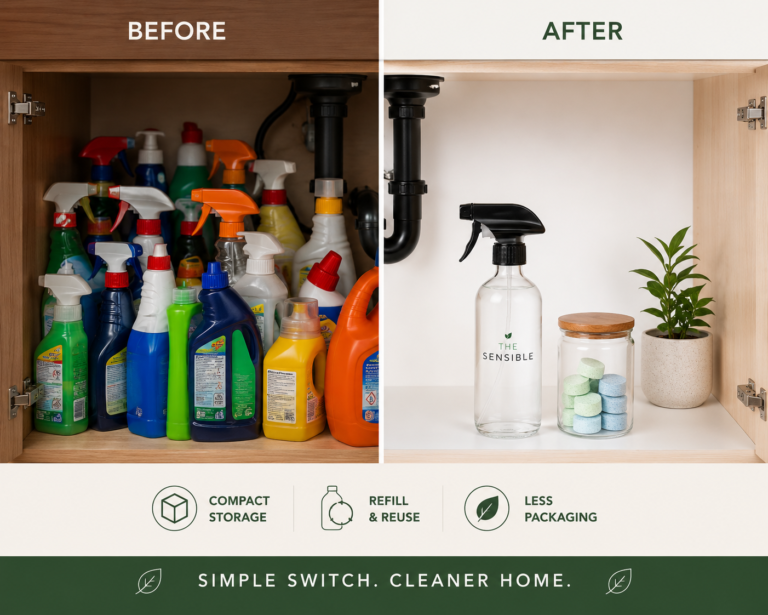
In return, it can provide a different approach to storage and refilling, particularly when used with a compatible reusable bottle.
Neither format is automatically right for everyone.
Some people will prefer the simplicity of grabbing a ready-to-use bottle.
Others may prefer preparing their own cleaning solution when needed.
If you’re interested in the broader differences, our upcoming guide Cleaning Tablets vs Liquid Cleaners: What’s the Difference? will compare the two formats in more detail.
How to Get the Best Results From Cleaning Tablets
If you want your cleaning routine to be simple and consistent, focus on a few basics.
Follow the dilution instructions
Use the recommended amount of water.
Use the right product
Choose a tablet formulated for the cleaning task.
Use a suitable bottle
Make sure the bottle is compatible with the product.
Allow enough time for dissolution
Don’t rush the preparation process.
Use an appropriate cleaning tool
A good cloth or mop can make a significant difference to the physical cleaning process.
Follow surface instructions
Don’t assume every cleaner is suitable for every material.
Store unused tablets properly
Keep them protected from moisture.
Don’t mix products
One formulation at a time.
These simple habits can make tablet-based cleaning much easier to incorporate into a regular household routine.
A Simple Cleaning Tablet Routine
Once you get used to the process, you can think of tablet-based cleaning as a small routine rather than a complicated preparation step.
Choose.
Choose the correct tablet for the cleaning job.
Prepare.
Add the recommended amount of water to the suitable bottle.
Dissolve.
Add the tablet and allow it to dissolve according to the instructions.
Clean.
Use the finished solution as directed.
Store.
Keep unused tablets dry and properly stored.
That’s the entire cycle.
And because the process is repeatable, it can become as familiar as preparing any other household product.
Final Takeaway
Learning how to use cleaning tablets is much easier than it might initially seem.
The basic process is:
Choose the right bottle → Add water → Add the tablet → Let it dissolve → Use the solution
The most important thing is to follow the instructions for the specific product you’re using.
Don’t guess the amount of water.
Don’t add extra tablets.
Don’t assume hot water is better.
Don’t use a cleaner on a surface unless it is suitable for that surface.
And don’t mix cleaning products.
Once you’ve got those basics right, tablet-based cleaning becomes a simple and repeatable part of your household routine.
The tablet is simply a concentrated way of delivering the cleaning formulation.
The real goal is the finished cleaning solution—and how effectively you use it.
If you haven’t already, you can go back to What Are Cleaning Tablets? A Beginner’s Guide to understand the basics, or dive deeper into How Do Cleaning Tablets Work? to understand what happens inside the tablet when it meets water.
And if you’re wondering whether these products actually perform as well as conventional cleaners, that’s the next important question.
Are Cleaning Tablets Effective? What to Consider Before Switching
Frequently Asked Questions
1. How do you use cleaning tablets?
The general process is to place the recommended amount of water in a suitable bottle, add the correct cleaning tablet, allow it to dissolve according to the manufacturer’s instructions, and then use the finished solution for its intended cleaning task.
2. How much water should I use with a cleaning tablet?
The correct amount depends on the specific product. Always follow the manufacturer’s recommended dilution rather than guessing.
3. Should I put the tablet in water or water in the tablet?
Follow the manufacturer’s instructions. For many tablet-based systems, the tablet is added to a bottle containing the recommended amount of water.
4. How long does a cleaning tablet take to dissolve?
Dissolving time varies between formulations. Some tablets dissolve relatively quickly while others may require more time. Follow the product’s instructions rather than assuming all tablets dissolve at the same speed.
5. Can I use hot water with cleaning tablets?
Only if the manufacturer recommends it. Water temperature can affect dissolution, but hot water isn’t automatically suitable for every cleaning formulation.
6. Can I use two cleaning tablets to make a stronger cleaner?
You shouldn’t assume that using more tablets will produce better cleaning. Follow the recommended tablet-to-water ratio.
7. Can I use cleaning tablets on every surface?
No. Surface compatibility depends on the formulation. Check the product instructions before using the solution on a particular surface.
8. Can I use the same bottle for different cleaning tablets?
A reusable bottle may be suitable for multiple compatible products, but it should be cleaned and rinsed appropriately before switching between different formulations. Never mix cleaning products.
9. Can I store the cleaning solution after dissolving the tablet?
This depends on the specific formulation. Check the manufacturer’s instructions for storage and recommended use after preparation.
10. Where should I store unused cleaning tablets?
Keep unused tablets in a dry location and follow the manufacturer’s storage instructions. Protect them from unwanted moisture.
11. Do I need to shake the bottle after adding the tablet?
Only if the manufacturer recommends shaking or mixing. Some products may simply need time to dissolve.
12. What should I do if the tablet doesn’t dissolve?
Check that you used the correct amount of water and followed the preparation instructions. Give the tablet the recommended amount of time to dissolve. If it consistently fails to dissolve as expected, contact the manufacturer.