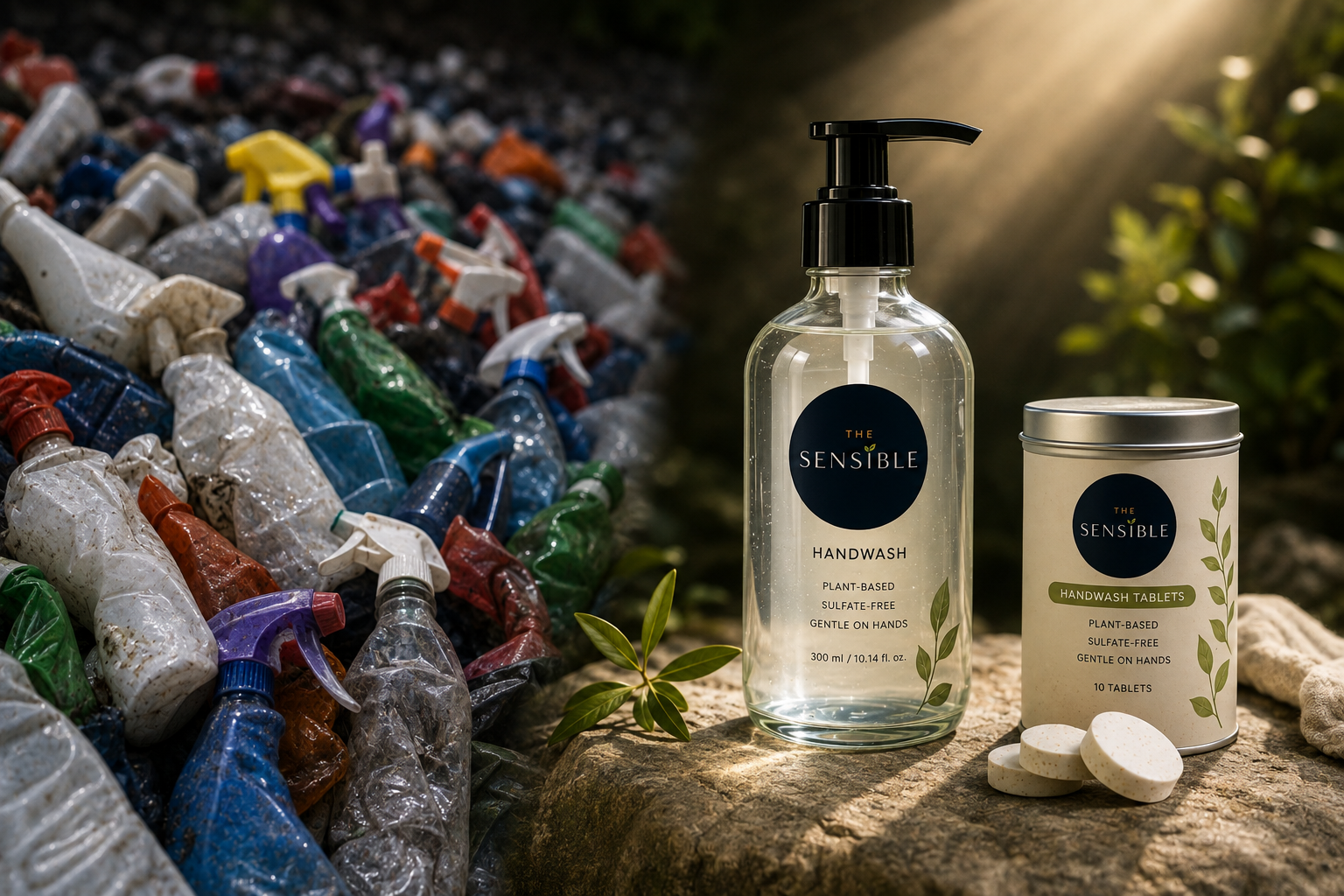
“The Plastic Graveyard vs. The Closed Loop”
The Hidden Plastic Problem: What Happens to Single-Use Cleaning Sprays?
We all know the familiar routine: you finish a bottle of surface cleaner, give it a quick rinse, and toss it into the blue recycling bin. It feels like a responsible, eco-friendly action. You did your part, and that plastic will surely be melted down and turned into a park bench or another bottle, right?
Unfortunately, the reality of the global recycling system is far more complicated. When it comes to single-use cleaning sprays, the “recycling solution” is largely an illusion. To truly minimize our environmental footprint, we need to look past the recycling bin and rethink how we purchase household products in the first place.
The Myth of the Blue Bin
The harsh truth is that only a fraction of the plastic we put into our recycling bins actually gets recycled. According to recent environmental studies, the global recycling rate for plastic waste hovers shockingly low—often under 10%.
Why are cleaning bottles specifically problematic?
- Complex Components: While the main body of a cleaner bottle might be made of recyclable PET (Polyethylene Terephthalate) or HDPE (High-Density Polyethylene), the trigger sprayers are usually a complex mix of different plastics, metal springs, and rubber gaskets. These cannot be easily separated at sorting facilities, meaning the entire top assembly goes straight to the landfill.
- Chemical Residue: Bottles that aren’t thoroughly rinsed can contaminate entire batches of recycling, causing facilities to divert them to the trash.
- Downcycling: Even when plastic is recycled, it degrades in quality. It isn’t a closed loop; a clear plastic bottle rarely becomes another clear plastic bottle. Eventually, all plastic reaches an end-of-life state in a landfill or environment.
The Exhausting Life Cycle of a Single-Use Bottle
To understand the sheer wastefulness of standard cleaning products, we have to look at the entire lifecycle of that brightly colored plastic bottle:
- Petroleum Extraction: Fossil fuels are drilled, refined, and processed into plastic pellets.
- Manufacturing: Those pellets are molded into bottles and trigger sprayers using massive amounts of energy and water.
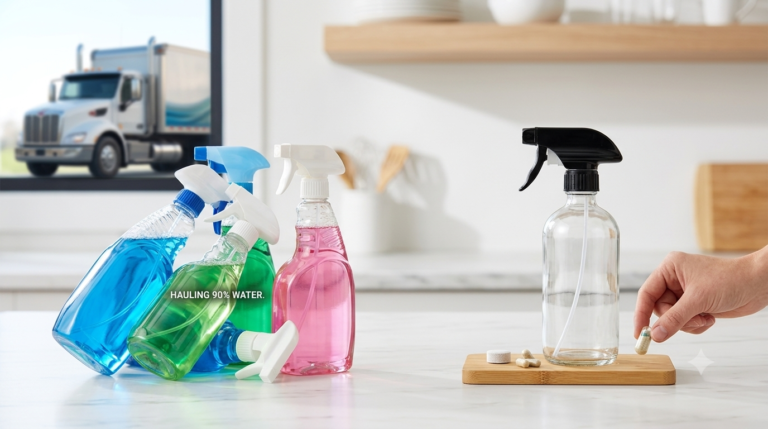
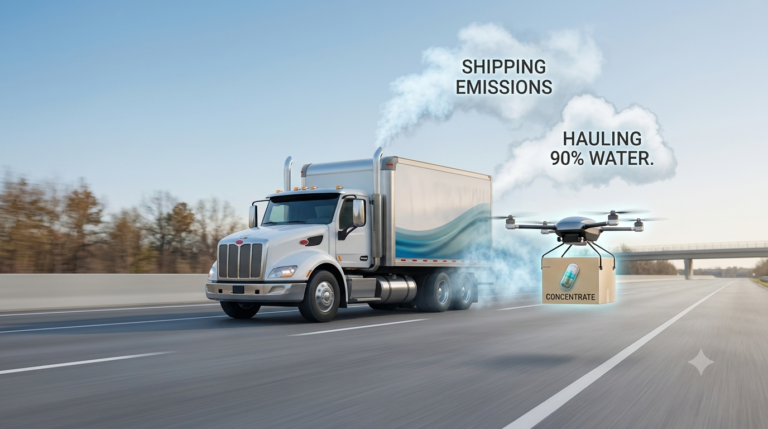
- The Water Weight: The bottle is filled with a formula that is 90% to 95% ordinary water.
- Heavy Transit: Fleets of diesel trucks transport this heavy, water-filled plastic across the country to a retail warehouse, then to a store, and finally to your home.
- Brief Lifespan: The product is used up in a matter of weeks or months.
- End of Life: The bottle is discarded, destined to sit in a landfill for up to 400 years, slowly breaking down into harmful microplastics.
Breaking the Cycle: The Forever Bottle & Refill Tablets
We cannot recycle our way out of the plastic crisis, but we can eliminate the demand for single-use plastics altogether. This is the core philosophy behind The Sensible’s approach to home care.
By switching to a permanent, durable container—like a high-quality glass or aluminum “Forever Bottle”—and utilizing dry, compressed cleaning tablets, you completely bypass the wasteful lifecycle of traditional cleaners. You already have water in your tap; there is no need to wrap it in single-use plastic and ship it across the country.
The Compound Impact of Switching
Small household changes create massive environmental shifts over time. Here is what happens when just one household switches a single multi-surface cleaner to a refillable tablet system:
| Timeframe | Single-Use Bottles Saved | Estimated Plastic Diverted | Environmental Benefit |
| 1 Year | 12 – 15 bottles | ~1.5 lbs of plastic | Prevents the manufacturing of new virgin plastic. |
| 3 Years | 36 – 45 bottles | ~4.5 lbs of plastic | Significantly reduces household carbon footprint from freight. |
| 5 Years | 60 – 75 bottles | ~7.5 lbs of plastic | Keeps complex trigger sprayers out of local landfills and oceans. |
True Sustainability is Sensible
Eco-anxiety is real, and the scale of global plastic pollution can feel overwhelming. However, solving the problem under your own sink is entirely within your control.
Transitioning to a circular economy doesn’t require sacrificing cleaning power or convenience. It simply requires a sensible upgrade: buy the bottle once, refill it forever, and leave the single-use plastic on the supermarket shelf where it belongs.