How Long Do Cleaning Tablets Last? Understanding Usage and Storage
Cleaning tablets are changing the way we think about everyday cleaning.
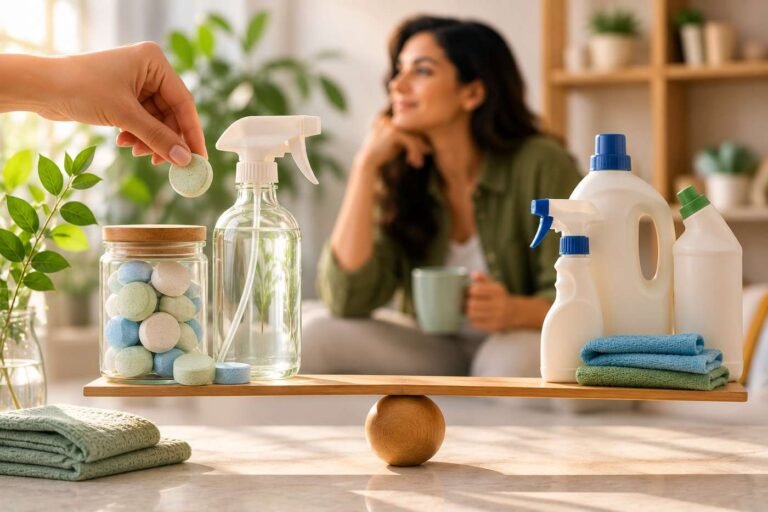
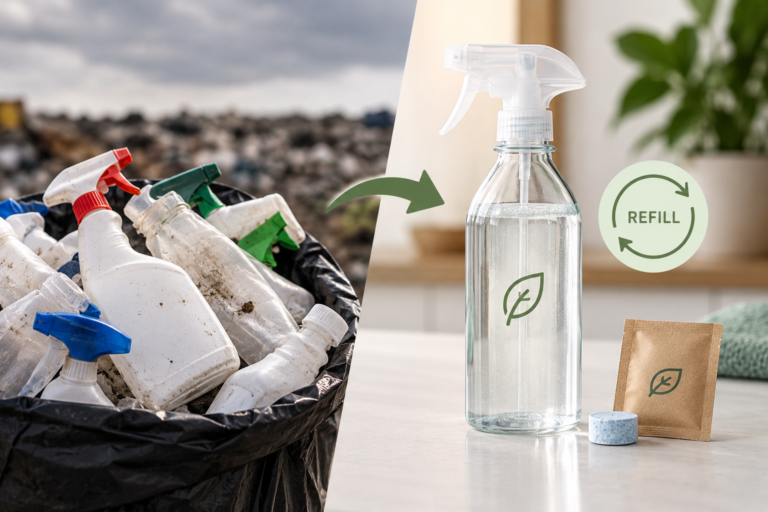
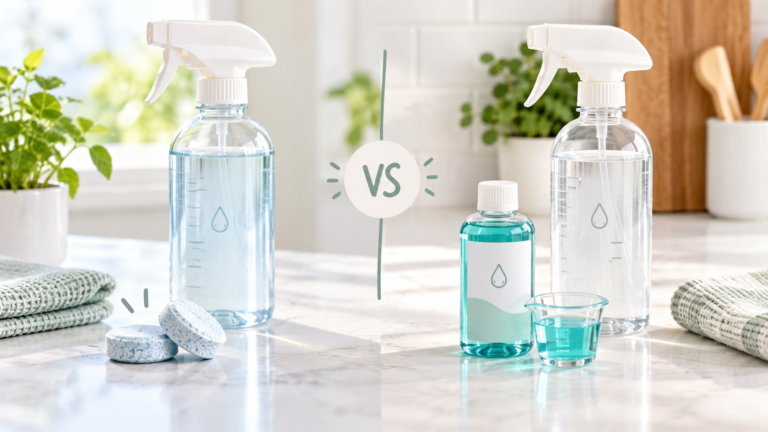
Instead of buying another full plastic bottle every time your surface cleaner, bathroom cleaner, or handwash runs out, a small concentrated tablet can be dissolved in water and turned into a ready-to-use product. The idea is simple: keep the bottle, replace the refill.
But once you start using cleaning tablets, a few practical questions naturally come up.
How long do cleaning tablets last? Can you keep them for months? What happens if you open the packaging? Does humidity affect them? And once a tablet has been dissolved in water, how long does the finished cleaner remain usable?
The answer depends on the type of tablet, its formulation, packaging, and how it is stored. However, one principle applies to almost all dissolvable cleaning tablets: moisture is their biggest enemy before use.
Because these tablets are designed to react with water, unwanted moisture from humid air can begin affecting them long before they reach your cleaning bottle. Research on effervescent tablet systems has consistently shown that humidity and temperature can influence physical stability and performance.
So, if you want your cleaning tablets to perform the way they were designed to, storage matters.
Let’s break it down.
What Exactly Is a Cleaning Tablet?
A cleaning tablet is essentially a concentrated form of a cleaning formulation.
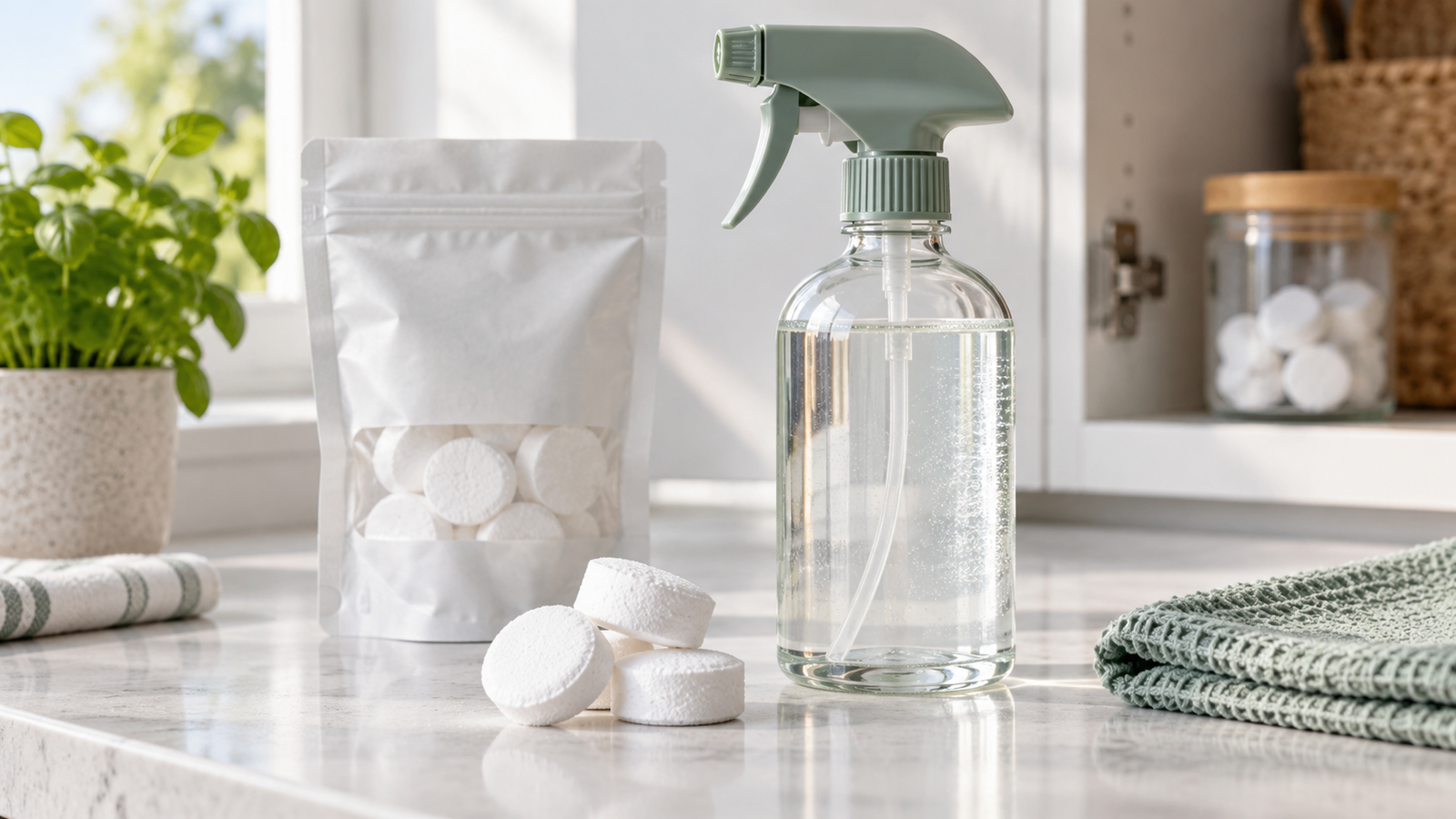
Instead of transporting a bottle filled mostly with water, the active ingredients and other formulation components are compressed into a small, lightweight tablet. When the tablet is added to the recommended amount of water, it dissolves and creates the finished cleaning solution.
This changes the traditional cleaning-product model.
With conventional cleaners, you purchase the bottle and the liquid inside it every time. With a tablet-based system, you can keep a reusable bottle and replenish the product using a compact refill.
That means the tablet has two very different stages of life:
Before dissolving: it needs to remain dry and protected from moisture.
After dissolving: it becomes a water-based cleaning solution and has a completely different storage profile.
Understanding this difference is important when thinking about shelf life.
How Long Do Cleaning Tablets Last?
There isn’t a single number that applies to every cleaning tablet.
The manufacturer’s stated shelf life should always be the first reference because the formulation, packaging, and stability testing determine how long a particular product is expected to remain within specification.
Many dissolvable or effervescent tablet products are designed with shelf lives measured in months or years when kept sealed and stored correctly. Some manufacturers of cleaning tablets, for example, state shelf lives of up to two years when tablets remain in their original moisture-protective packaging.
But “two years” should not be treated as a universal rule for all cleaning tablets.
A better way to think about it is:
Sealed + dry + correctly stored = longest expected shelf life.
Opened + exposed to humidity = potentially shorter usable life.
The printed expiry or best-before information supplied by the manufacturer should therefore take priority.
Why Moisture Matters So Much
Here’s the science behind it.
Many dissolvable cleaning tablets rely on ingredients that are intentionally designed to interact with water. This is useful when you’re preparing your cleaner—but not while the tablet is sitting inside its package.
Once moisture enters the tablet, some of its ingredients can begin reacting prematurely.
For effervescent systems, this can involve an acid-base reaction that normally produces carbon dioxide when the tablet is placed in water. If moisture reaches the tablet during storage, part of that reaction can begin before you actually use it. This can gradually reduce the tablet’s ability to perform as intended.
That is why moisture-resistant packaging is so important.
The International Pharmacopoeia specifically notes that moisture-sensitive tablets such as effervescent tablets should be kept in tightly closed containers or moisture-proof packs.
In other words, the packaging isn’t simply there to make the product look neat.
It is part of the product’s protection system.
Does Humidity Reduce the Life of Cleaning Tablets?
Yes, humidity can matter—especially for moisture-sensitive formulations.
This becomes particularly relevant in warm and humid environments.
A tablet stored in a dry cupboard is exposed to very different conditions from one sitting beside a kitchen sink, in a steamy bathroom, or inside an open cabinet during monsoon season.
Studies of effervescent formulations have found that elevated temperature and relative humidity can increase moisture uptake and contribute to physical and chemical changes.
That doesn’t mean your tablet will suddenly stop working because you opened the package once.
It means repeated exposure to humid air can gradually compromise its stability.
Think of it like this:
A single brief exposure may have little visible effect.
Repeated exposure over weeks or months can be a different story.
This is why storage habits matter more than people often realize.
Where Should You Store Cleaning Tablets?
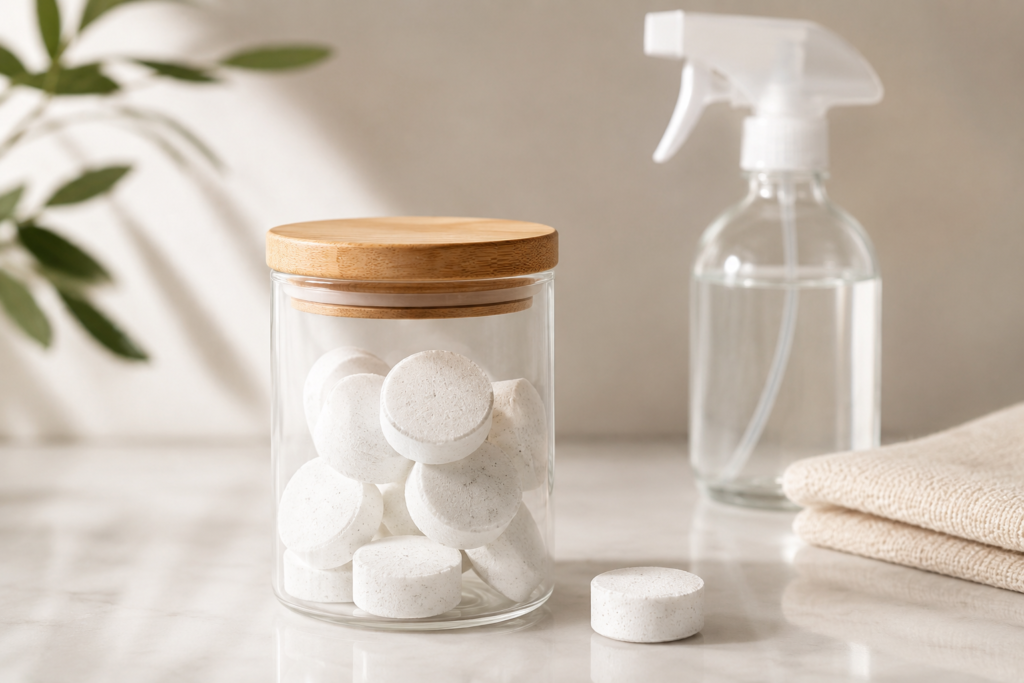
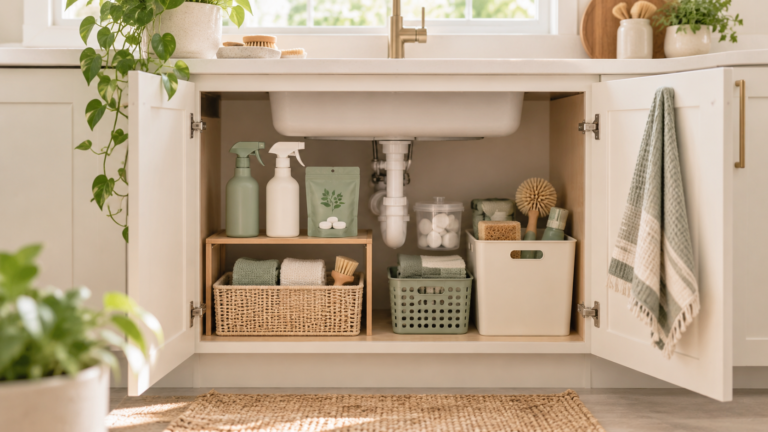
The best place is usually somewhere cool, dry, and away from direct moisture.
A closed cupboard or drawer can work well, provided the area isn’t exposed to excessive heat or humidity.
Good storage locations include:
- A dry kitchen cabinet away from the sink
- A bedroom or utility-room cupboard
- A closed storage drawer
- A dry shelf away from windows and direct sunlight
Less suitable locations include:
- Inside the shower area
- Beside a bathroom sink
- Directly above a kitchen sink
- Near a dishwasher that releases steam
- On a damp countertop
- In direct sunlight
- In areas exposed to significant heat
The bathroom may seem like the obvious place to keep bathroom-cleaning tablets, but it can actually be one of the less suitable environments.
Every hot shower introduces moisture into the air.
And moisture is precisely what you want to keep away from the tablet until you’re ready to use it.
Should You Keep Cleaning Tablets in Their Original Packaging?
Absolutely.
If the tablets are individually sealed, leave them sealed until you’re ready to use them.
Individual packaging provides a barrier between the tablet and environmental moisture. This is particularly important for formulations that are highly moisture-sensitive. Packaging studies on effervescent systems have shown that maintaining moisture integrity is critical for stability.
Avoid transferring tablets into:
- Open jars
- Bowls
- Unsealed containers
- Ordinary pill organizers
- Loose plastic bags
These alternatives may not provide the same moisture protection as the original packaging.
The simplest rule is:
If the manufacturer packaged the tablet individually, keep it that way.
What If the Packaging Has Already Been Opened?
This is where things become slightly more complicated.
Opening a package doesn’t automatically mean the tablets are unusable.
However, once tablets are exposed to the surrounding environment, they can begin interacting with atmospheric moisture. The speed at which this happens depends on the formulation, packaging, humidity, and storage conditions.
Some cleaning-tablet manufacturers provide specific “after opening” guidance, while others focus on the unopened shelf life.
So don’t assume that an unopened shelf-life figure automatically applies after the package has been opened.
Instead:
Follow the manufacturer’s in-use instructions whenever they are provided.
If a multi-tablet container is designed to be resealed, close it immediately after removing a tablet.
Don’t leave the container open while you’re cleaning.
And avoid handling tablets with wet hands.
Can You Touch Cleaning Tablets With Wet Hands?
It’s best not to.
Even if your hands only feel slightly damp, you’re introducing water directly to a moisture-sensitive product.
Instead, make sure your hands are dry before handling a tablet.
If you’re working near a sink, shower, or bucket, keep the remaining tablets safely away from splashes.
It sounds like a small detail, but small amounts of moisture repeated over time can matter.
Dry hands. Dry storage. Closed packaging.
Those three habits go a long way.
What Happens If a Cleaning Tablet Gets Damp?
A damp tablet may show physical changes before you notice a major change in cleaning performance.
Possible signs include:
- Softening
- Crumbling
- Powdery residue
- Tablets sticking together
- Surface roughness
- Discoloration
- Premature fizzing or bubbling
- A noticeable change in dissolution behavior
Research into effervescent systems has documented changes such as surface roughening, foaming, caking, and increased moisture uptake under humid storage conditions.
These signs don’t necessarily mean every slightly imperfect tablet is dangerous or unusable. However, they indicate that the product may have been exposed to conditions outside its intended storage environment.
If a tablet looks significantly degraded, has been exposed to water, or is past its manufacturer’s expiry date, it’s better to follow the manufacturer’s guidance rather than assume it will perform normally.
What About Temperature?
Humidity isn’t the only environmental factor.
Temperature can also affect tablet stability.
Higher temperatures can accelerate chemical and physical changes in some formulations, particularly when combined with humidity. Stability research on effervescent tablets has shown that higher temperature and relative humidity can increase moisture content and contribute to degradation.
This is why a cool cupboard is generally preferable to a location exposed to heat.
You don’t necessarily need to refrigerate cleaning tablets.
In fact, unless the manufacturer specifically instructs you to do so, refrigeration is usually unnecessary.
The goal is simply to avoid extremes.
Cool, dry, stable conditions are the better choice.
How Long Does the Cleaner Last After the Tablet Is Dissolved?
This is a completely different question from tablet shelf life.
Once you add the tablet to water, you’ve converted a dry concentrated product into a water-based cleaning solution.
The shelf life of that finished product depends on the formulation.
Preservative system, packaging, water quality, contamination during use, storage temperature, and the manufacturer’s testing all play a role.
Therefore, you should not automatically assume that a tablet’s shelf life applies to the diluted cleaner.
For example, some cleaning-tablet manufacturers specify a defined period for the prepared solution after dissolution, while others provide different instructions depending on the product.
The best approach is to follow the product-specific instructions.
If the manufacturer provides a recommended “use within” period after dilution, treat that as the guide.
Why Does the Finished Cleaner Have a Different Shelf Life?
Water changes everything.
A dry tablet can remain relatively stable because many chemical reactions require water to proceed.
Once the tablet is dissolved, ingredients are now distributed throughout a water-based solution.
That means factors such as microbial control, preservative effectiveness, container hygiene, temperature, and exposure to air become relevant.
This is also why the bottle you use matters.
A reusable bottle should be clean before you prepare a fresh batch. Adding a new tablet to a bottle containing residue from an old cleaning solution isn’t the same as starting with a clean container.
A clean bottle helps maintain the quality of the freshly prepared solution.
Does the Type of Water Matter?
It can.
Tap water contains naturally occurring minerals, and the exact composition varies by location.
In areas with hard water, minerals such as calcium and magnesium can interact with certain cleaning formulations or leave deposits after water evaporates.
Some cleaning-product manufacturers recommend using specific water types where relevant to their formulation.
For most household cleaning applications, however, the important thing is to follow the manufacturer’s dilution instructions rather than changing the water-to-tablet ratio yourself.
More tablet doesn’t necessarily mean more cleaning power.
And less water doesn’t necessarily mean a better cleaner.
The formulation is designed around a particular concentration.
What About the Reusable Bottle?
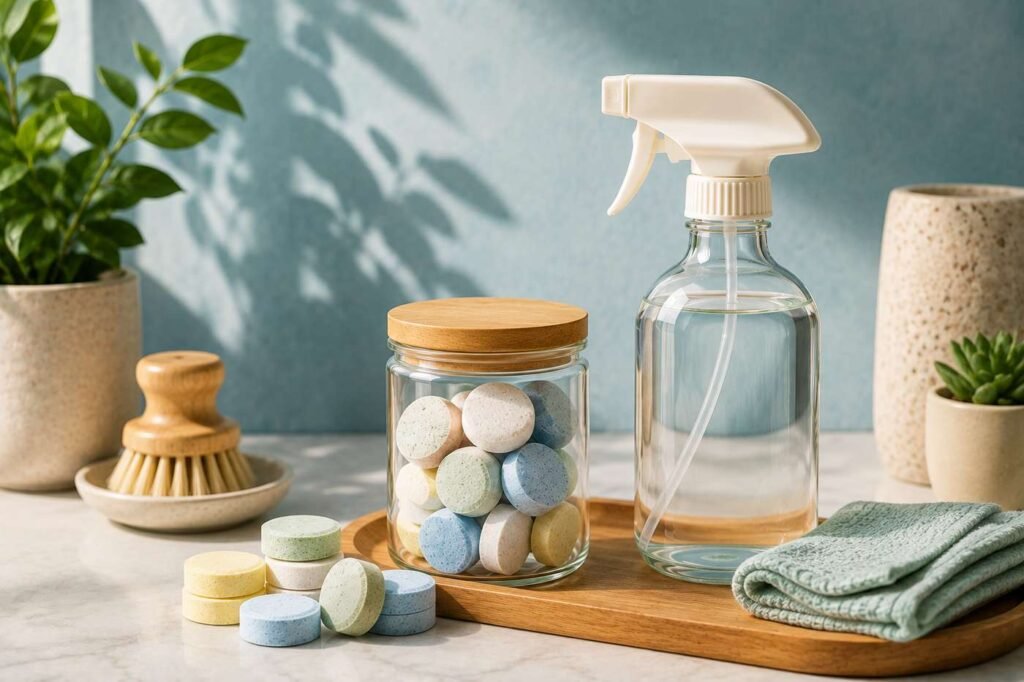
The bottle is another part of the storage equation.
If you’re using cleaning tablets as refills, you’re likely using the same bottle repeatedly.
That’s one of the major advantages of the format—but it also means the bottle needs proper care.
Before preparing a new batch:
- Empty the previous solution completely.
- Rinse the bottle if the product instructions recommend it.
- Allow it to dry where appropriate.
- Add the recommended amount of water.
- Add the tablet according to the instructions.
- Allow it to dissolve completely.
- Close the bottle properly.
Don’t continuously top up an old solution with new water and another tablet.
That can make it difficult to know what concentration you’re actually using and may compromise product performance.
How Can You Tell If a Cleaning Tablet Has Gone Bad?
There are several warning signs to look for.
1. The tablet has become unusually soft
A tablet that was originally firm but has become soft or crumbly may have absorbed moisture.
2. Tablets are sticking together
Clumping can indicate moisture exposure.
3. The surface looks rough or damaged
Surface changes can occur when moisture interacts with the tablet.
4. The tablet has started reacting inside its packaging
Visible fizzing, bubbling, or unusual residue before use is a strong indication that moisture has reached the formulation.
5. The tablet no longer dissolves normally
A major change in dissolution time or behavior may indicate that the tablet has been affected by storage conditions.
6. The product is past its stated expiry date
Even if it looks normal, an expired product shouldn’t automatically be assumed to perform to specification.
When in doubt, check the manufacturer’s instructions.
Do Cleaning Tablets Expire?
Yes.
Like other formulated products, cleaning tablets can have a defined shelf life.
But “expiration” doesn’t mean the tablet suddenly becomes unusable the day after the printed date.
Rather, the manufacturer establishes a period during which the product is expected to meet its specified quality and performance characteristics when stored according to the recommended conditions.
That’s why the date on the packaging matters.
The key distinction is:
Shelf life is based on tested storage conditions—not careless storage.
A tablet stored correctly is far more likely to remain within its intended specifications than one exposed to heat and humidity for months.
How to Make Your Cleaning Tablets Last Longer
The good news is that proper storage doesn’t require much effort.
Follow these simple habits:
Keep them dry.
Moisture is the biggest thing to avoid.
Keep them sealed.
Open the packaging only when you’re ready to use a tablet.
Store them somewhere cool.
Avoid unnecessary heat.
Keep them away from steam.
Bathrooms and areas immediately beside sinks can be surprisingly humid.
Use dry hands.
Don’t introduce moisture directly to the tablet.
Don’t transfer them unnecessarily.
Original packaging is generally designed to protect the product.
Follow the manufacturer’s expiry and storage instructions.
Prepare only what you need.
Once a tablet becomes a cleaning solution, follow the recommended in-use period.
These habits are simple, but they can make a significant difference.
Cleaning Tablets and Humid Indian Weather
For Indian households, storage deserves particular attention.
Summer temperatures can become high, while monsoon weather can push humidity significantly higher. In these conditions, moisture-sensitive products can face more challenging storage conditions than they would in a consistently dry environment.
That doesn’t mean cleaning tablets are unsuitable for humid climates.
It simply means packaging and storage become even more important.
During particularly humid periods, keep your tablets in their original sealed packaging and store them in the driest practical cupboard.
Avoid keeping them next to sinks or in bathrooms simply because that’s where you’ll eventually use the cleaner.
Think of the tablet as a concentrated product that prefers a dry environment until the moment you intentionally add water.
The Bigger Advantage of Cleaning Tablets
There is another reason storage matters.
Cleaning tablets are designed to separate the product itself from the water that you can often source at home.
That means the refill can be dramatically smaller and lighter than transporting a full bottle of ready-to-use liquid cleaner.
Instead of shipping litres of water every time, you’re storing a compact concentrate until you need it.
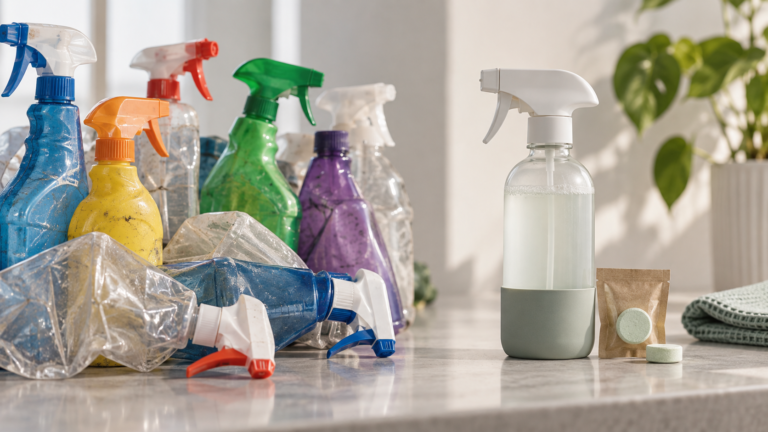
And when the tablet is finished, you reuse the bottle rather than automatically replacing it.
That’s the basic idea behind a more sensible cleaning routine:
Keep the bottle. Refill the product. Reduce unnecessary packaging.
But sustainability doesn’t have to come at the expense of practicality.
A good refill system should also be easy to store, easy to use, and reliable from the first tablet to the last.
Frequently Asked Questions
How long do cleaning tablets last unopened?
The answer depends on the product and formulation. Many cleaning-tablet products are designed to remain stable for months or even years when sealed and stored correctly. Always follow the manufacturer’s stated shelf life.
How long do cleaning tablets last after opening?
There is no universal period. Once exposed to air, moisture can begin affecting sensitive formulations. Follow the manufacturer’s specific in-use instructions and keep the remaining tablets tightly sealed.
Can I store cleaning tablets in the bathroom?
It’s generally better to avoid it because bathrooms can become warm and humid, particularly after showers. A cool, dry cupboard is usually a better option.
Do cleaning tablets need to be refrigerated?
Usually not unless the manufacturer specifically says so. A cool, dry location away from temperature extremes is generally preferable.
Can humidity ruin cleaning tablets?
Humidity can affect moisture-sensitive tablets and may cause softening, crumbling, clumping, premature reaction, or changes in dissolution and performance.
Can I use a tablet that looks slightly damaged?
If a tablet has been exposed to moisture or shows significant changes in appearance, follow the manufacturer’s guidance rather than assuming it will work normally.
How long does the cleaner last after dissolving?
That depends on the formulation and manufacturer’s testing. The shelf life of a dry tablet should not automatically be applied to the finished water-based cleaner.
Should I keep cleaning tablets in their original packaging?
Yes. If they’re individually sealed, leave them sealed until use. Moisture-resistant packaging is an important part of protecting sensitive tablet formulations.
The Simple Rule to Remember
So, how long do cleaning tablets last?
As long as their formulation and packaging are designed to support—and you follow the manufacturer’s stated shelf life and storage instructions.
But the bigger lesson is even simpler:
Keep the tablet dry until you’re ready to use it.
Store it somewhere cool and dry. Keep it in its original packaging. Reseal opened containers immediately. Keep it away from steam, splashes, and wet hands.
Once dissolved, treat the resulting cleaner as a separate product and follow its recommended use-by period.
Cleaning tablets may be small, but they’re carefully formulated to do a big job once water is added. Protecting them from moisture before that moment helps ensure that when you finally drop one into your reusable bottle, it performs exactly as intended.
And that’s really what makes the refill model work: a small, concentrated tablet that stays stable when stored properly, transforms into the cleaner you need when you need it, and lets the bottle keep doing its job again and again.
At The Sensible, that’s the idea behind making everyday cleaning a little more thoughtful—not complicated, just more sensible.
Also Read : Are Cleaning tablets effective?
Follow The Sensible on : INSTAGRAM