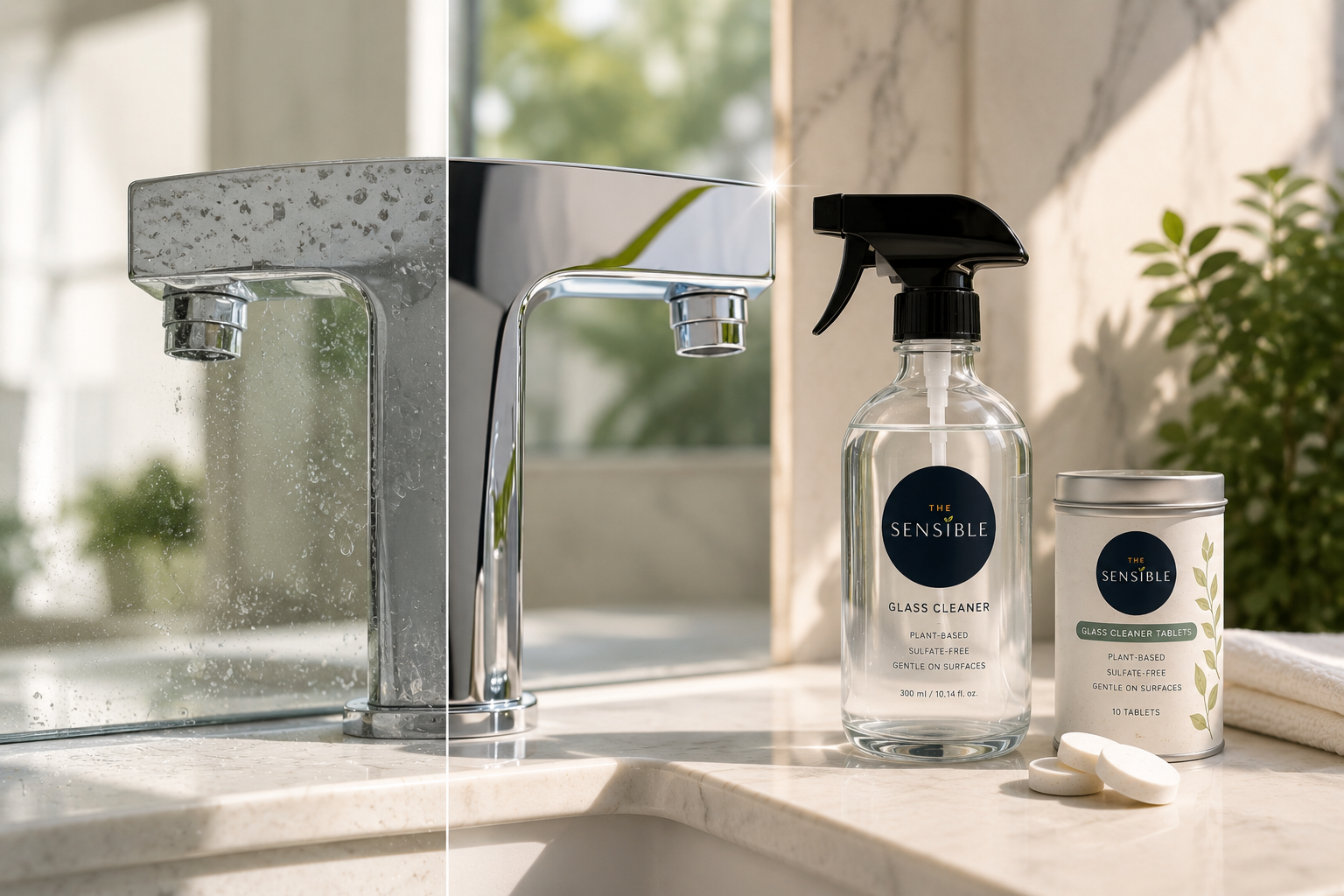
“The Science of Mineral Dissolution”
Hard Water vs. Green Cleaners: The Science of Mineral Dissolution
If you have ever sprayed down a glass shower door, polished a chrome faucet, or wiped down a quartz countertop only to watch white, cloudy spots reappear as soon as the surface dries, you are dealing with hard water.
For years, the conventional fix for mineral buildup was harsh chemistry: heavy industrial acids, toxic fumes, and chlorine bleach. This created a common myth that plant-based, eco-friendly cleaners are “too weak” to handle tough mineral deposits.
Understanding the basic chemistry of mineral dissolution shows how a modern, well-formulated cleaning tablet solves the hard water problem safely without caustic fumes or surface-damaging acids.
What Is Hard Water (and Why Does It Leave Spots)?
Hard water contains high concentrations of dissolved minerals—primarily calcium and magnesium ions.
When tap water evaporates off your counters, glass, or fixtures, H₂O vapor leaves into the air while the heavy mineral ions stay behind. These minerals bond together to form calcium carbonate (scale), creating stubborn, chalky white spots and dull films.
The Secret Weapon: Chelation Chemistry
To clean hard water deposits without resorting to dangerous, lung-irritating acids, modern plant-based chemistry relies on chelating agents (pronounced key-lay-ting).
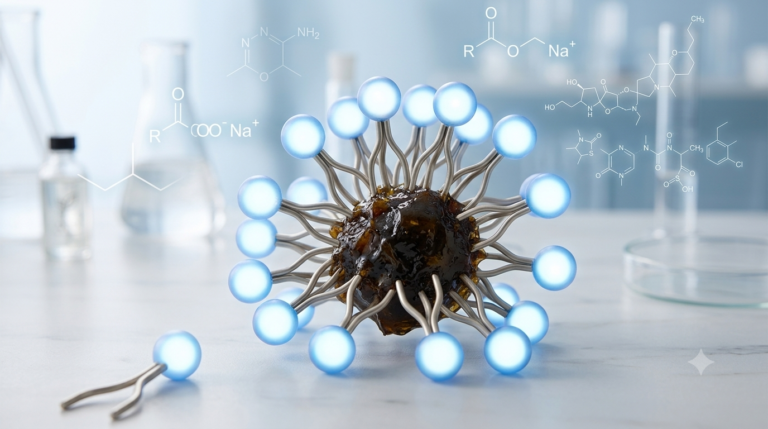
The word “chelate” comes from the Greek word chele, meaning “claw.” Chelating agents are specialized plant-derived molecules designed to act like microscopic claws:
- Binding: When sprayed onto a surface, the chelating agent seeks out positively charged calcium and magnesium ions.
- Encapsulation: The molecule wraps around the mineral ion, forming a stable, water-soluble complex.
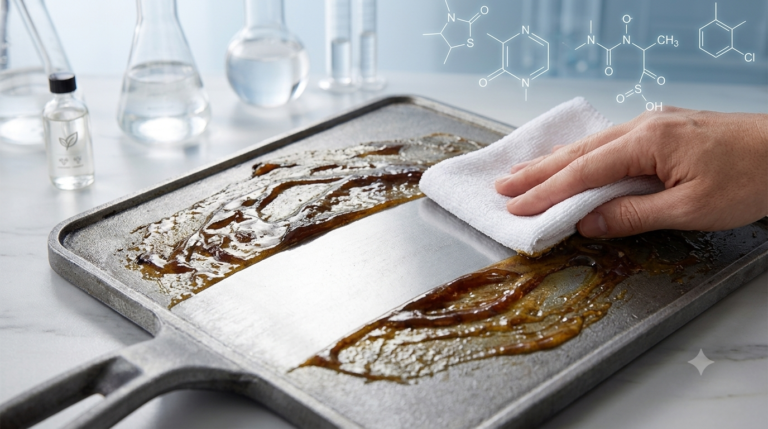
- Removal: Once bound, the mineral loses its ability to stick to glass, stone, or metal. It suspends in the liquid solution and wipes away completely onto your cloth.
Because the minerals are chemically encapsulated rather than scrubbed off with harsh abrasives, your glass and chrome stay completely scratch-free.
Why Effervescent Tablets Excel in Hard Water
Liquid cleaning sprays shipped in plastic bottles sit on warehouse shelves for months. Over time, premixed liquid formulas can lose stability, especially when interacting with varying tap water profiles at home.
Effervescent cleaning tablets offer two distinct chemical advantages:
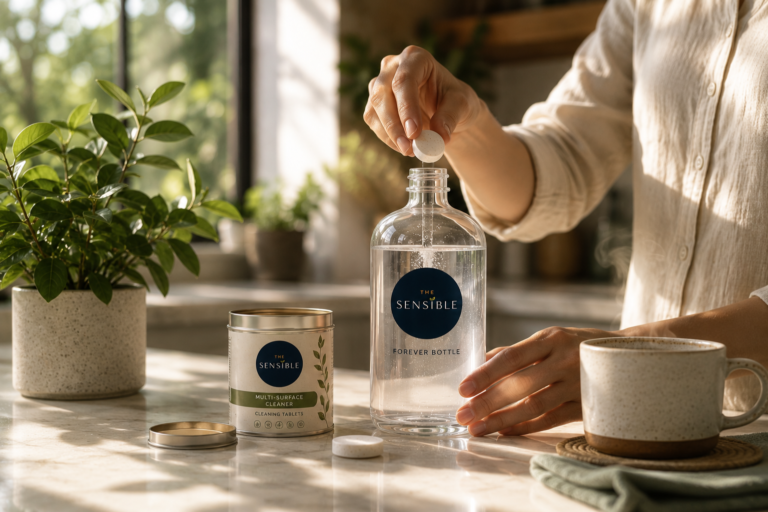
- Fresh Activation: The chelating agents and plant-derived surfactants activate the moment the tablet dissolves in your bottle’s fresh water, delivering peak potency.
- pH Balance: High acidity strips mineral buildup, but it also dulls expensive quartz, eats away at grout, and etches sealed granite. A balanced tablet formula optimizes mineral solubility at a safe, non-corrosive pH.
3 Quick Tips for Tackling Hard Water Buildup
| Practice | Why It Works |
| Use Quality Microfiber Cloths | Microfiber’s split-synthetic fibers lift the bound mineral-surfactant solution off the surface instead of just pushing wet minerals around. |
| Spray & Wait 30 Seconds | Give the chelating agents time to wrap around and loosen the calcium bonds before wiping. |
| Buff Glass Dry | On high-shine surfaces like mirrors and glass, wiping completely dry prevents remaining tap water droplets from evaporating into new spots. |